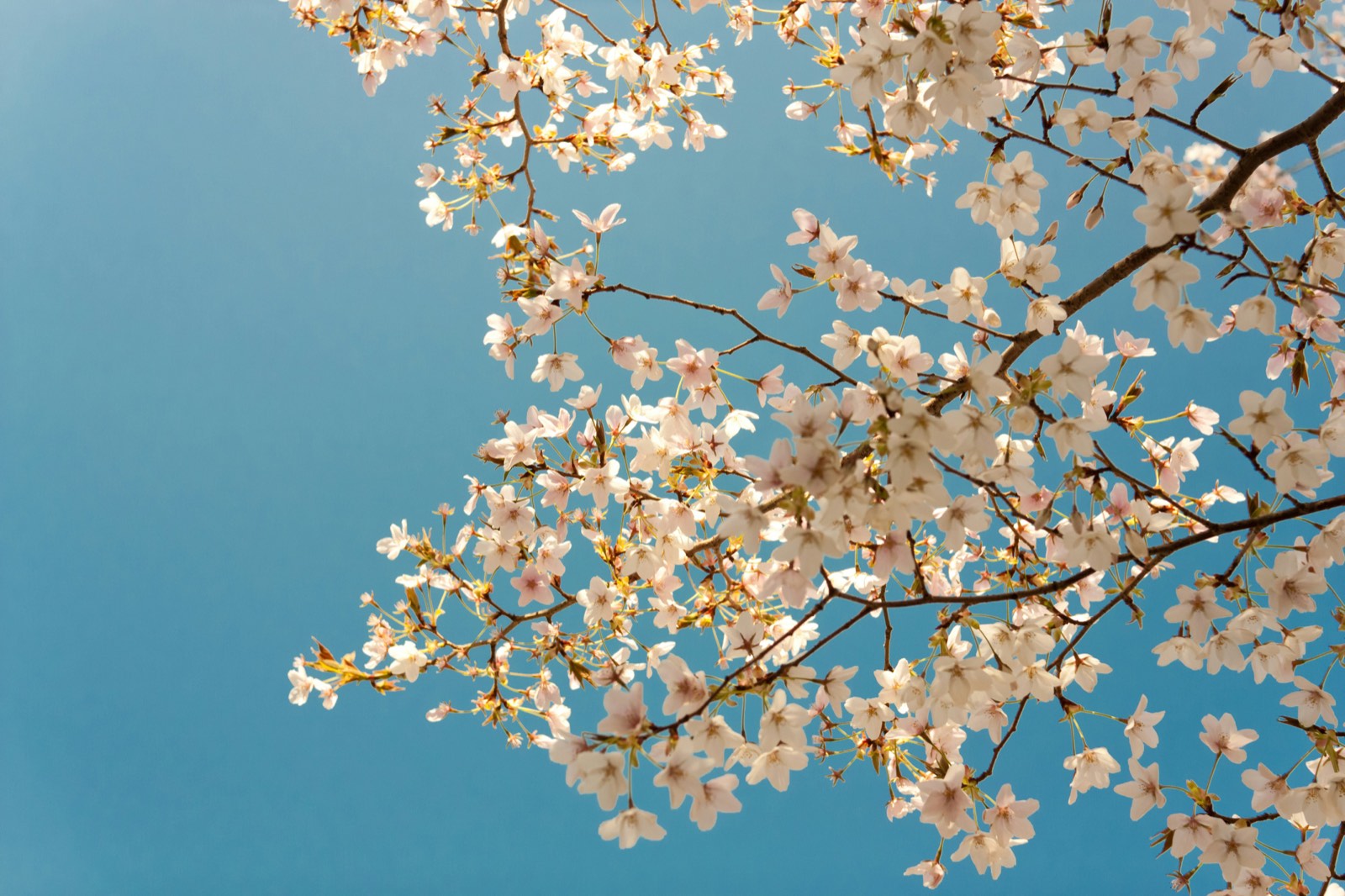
Washington’s cherry blossoms are America’s answer to Japan’s sakura season — and the same brutal math applies. Peak bloom at the Tidal Basin lasts only a matter of days, roughly 1.6 million people show up for the festival around it, and the difference between petals and bare branches can be a single week. This guide covers when the bloom actually happens, how to read the National Park Service forecast, and the construction detail most guides still miss.
When do DC’s cherry blossoms peak?
Peak bloom — defined by the NPS as the day 70% of the Yoshino trees around the Tidal Basin are open — usually lands in late March to early April. In 2026, the NPS predicted peak bloom for March 29 – April 1, squarely in the historical sweet spot.
The National Cherry Blossom Festival wraps a much longer window around that moment: in 2026 it ran March 20 – April 12. That’s deliberate — the festival can’t move, but the bloom can. A warm February pulls peak bloom earlier; a March cold snap pushes it later. Plan your trip around the bloom forecast, not the festival dates, and treat the festival’s parades and events as a bonus.
| What | 2026 dates | What it means for you |
|---|---|---|
| NPS predicted peak bloom | March 29 – April 1 | The 3–4 days to target |
| National Cherry Blossom Festival | March 20 – April 12 | Events run whether trees cooperate or not |
| Petal-fall window | ~4–7 days after peak | Rain or wind can end it early |
How to track the bloom
The NPS announces its peak bloom prediction in early March and updates it as the buds move through five trackable stages (green buds → florets visible → extension of florets → peduncle elongation → puffy white). Independent trackers — cherryblossomwatch.com is the best-known one-person operation — post near-daily photo updates once the buds start moving.
The rhythm that works: check the forecast when the NPS announcement drops in early March, book refundable lodging around the predicted window, then watch daily updates in the final two weeks and shift your visit day if you can. Even a one-day flex helps — peak bloom plus sunshine on a weekday beats peak bloom in weekend rain.
The 2026 detail most guides miss: seawall construction
The Tidal Basin’s century-old seawall is being rebuilt, and through 2026 that means construction fencing along the stretch from the FDR Memorial past the Inlet Bridge toward the Jefferson Memorial. Some of the classic postcard angles — blossoms arcing over the water with Jefferson’s dome behind — are compromised or fenced off entirely on that side.
What to do about it: concentrate on the northeast arc of the basin near the MLK Memorial and the paths through West Potomac Park, where the trees are just as dense and the fencing doesn’t intrude. Long-term this is good news — the reconstruction replaces failing sections where trees were literally flooding at high tide — but if you’re planning a 2026 or 2027 visit, check the NPS closure map before you commit to a sunrise photo plan.
Where to see the blossoms
Tidal Basin & West Potomac Park: the main event — thousands of Yoshino trees ringing the water. Sunrise is genuinely the answer here: at 6:30 a.m. you share the loop with joggers and photographers; by 11 a.m. on a peak weekend it’s shoulder to shoulder.
U.S. National Arboretum: DC’s best-kept blossom secret. Multiple cherry varieties bloom in staggered waves, so it’s your insurance policy if you arrive before or after Tidal Basin peak — and it’s never remotely as crowded.
Kenwood, Bethesda: a residential neighborhood just over the Maryland line where mature cherries form a canopy over the streets. It typically peaks a few days after the Tidal Basin, making it the classic “we got here late” save. Be a good guest — these are people’s front yards.
A one-day peak-bloom plan
6:15 a.m. — Arrive at the Tidal Basin for sunrise. Walk the loop counterclockwise from the MLK Memorial while the light is soft and the paths are empty.
9:00 a.m. — Breakfast near L’Enfant Plaza or the Wharf, then hit the free Smithsonian museums along the Mall while the midday crowds swarm the trees.
3:30 p.m. — Metro to the National Arboretum or drive to Kenwood for a second, calmer blossom fix in afternoon light.
Evening — Festival events downtown, or dinner at the Wharf with a view back across the water.
Booking timeline
DC in cherry blossom season is busy but not Kyoto-in-April busy — festival visitors spend around $202 million in the city and stay about four days on average, and hotels price accordingly.
- 3–6 months out: Book your hotel with free cancellation. Downtown and Southwest Waterfront put you within walking distance of the basin.
- Early March: NPS prediction drops — lock in your exact dates.
- 2 weeks out: Watch daily bud-stage updates and shuffle your visit day toward the peak if your plans allow.
- Anytime: Festival signature events (the parade, the kite festival) are mostly free, but ticketed events sell out — book when the schedule publishes.
Practical tips
- Take Metro, not a car. There is effectively no parking near the Tidal Basin during the festival, and surrounding roads jam solid on peak weekends. Smithsonian station is the closest stop; L’Enfant Plaza gives you more line options and only adds a few minutes’ walk.
- Weekdays beat weekends by an enormous margin. If peak bloom lands Tuesday–Thursday, count yourself lucky and go then.
- Weather: late March in DC swings from 40°F mornings to 70°F afternoons. Layers, and a rain shell — spring rain is common and it’s also what ends the bloom, so front-load your basin time.
- Don’t pick or shake. Picking blossoms on National Park land is illegal, and rangers do enforce it. The falling petals at the end of the bloom are the best photos anyway.
- Missed the peak? Arboretum first, Kenwood second — between them you can usually stretch the season by a week on either side of the Tidal Basin’s window.