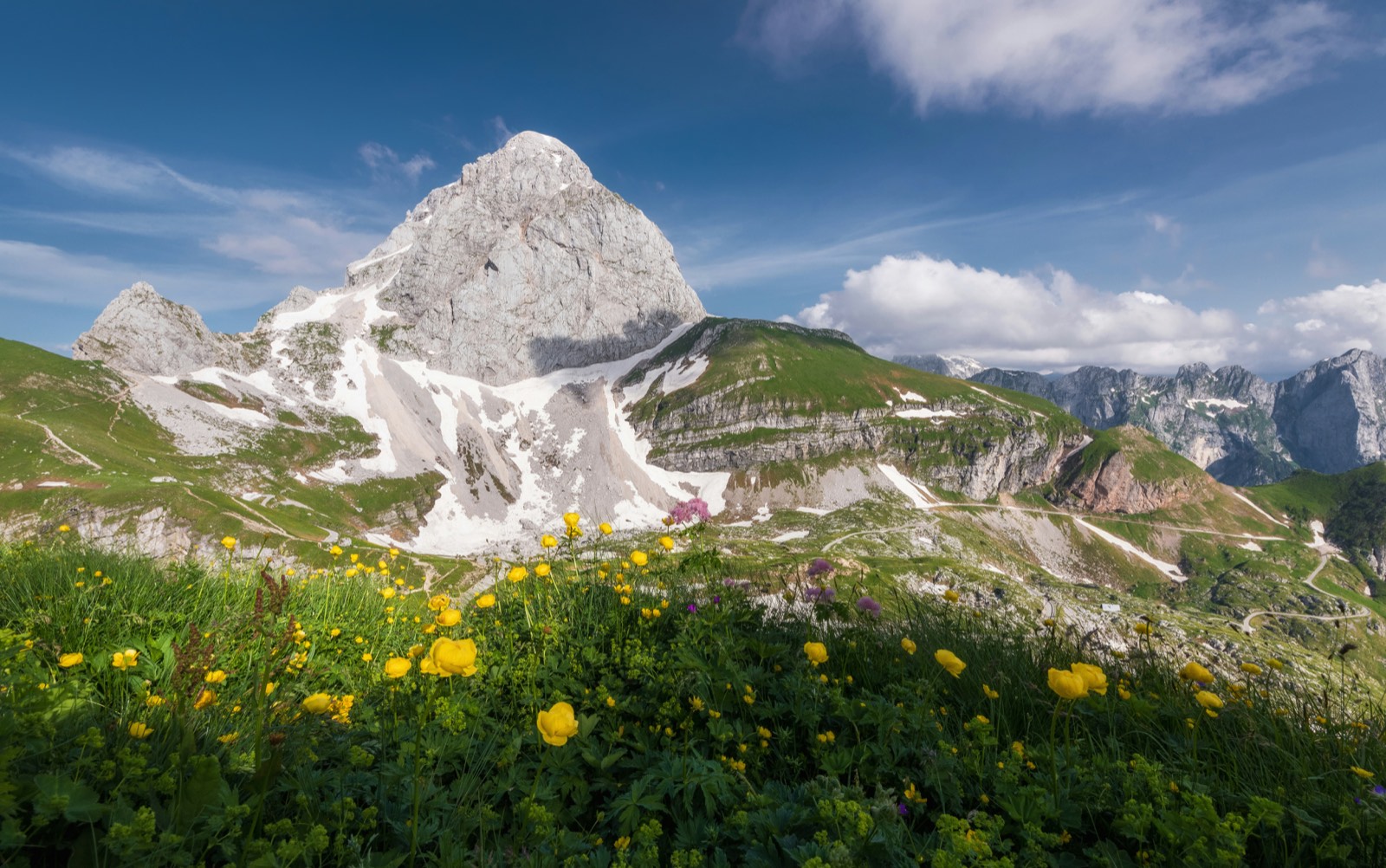
The Valley of Flowers is the bloom you have to earn. There is no road, no shuttle, no viewpoint parking lot — just an 11 km trek into a UNESCO World Heritage valley high in the Uttarakhand Himalayas, where hundreds of alpine wildflower species erupt during the monsoon. It is one of the great flower spectacles on Earth precisely because it filters out everyone unwilling to walk to it.
This guide covers the month-by-month trade-offs, the multi-stage journey in, permits, and what to actually expect at the trailhead village of Ghangaria.
When to go: the monsoon trade-off
The national park opens June 1 and stays open into early October, but the bloom and the weather pull in opposite directions — this is a monsoon bloom, and the rain that feeds the flowers also hides the peaks. Full bloom runs mid-July to mid-August. Pick your month by what you’re optimizing for:
| Month | Bloom | Weather | Crowds |
|---|---|---|---|
| June | Early flowers, snow patches | Driest of the season | Light |
| July | Building fast | Monsoon arrives | Fewer crowds |
| August | Maximum bloom | Wettest — rain most days | Peak (Indian holiday season) |
| September | Fading but still good | Clearing — best mountain views | Moderate |
The honest answer: late July to early August is the sweet spot for flowers, and you will get rained on — that’s the deal. If you want the valley framed by clear Himalayan peaks, go in September and accept a bloom past its prime. If you want the place quietest, July edges out August.
Getting there: the trek-in-only reality
This is a journey in stages, and each stage is non-negotiable:
Stage 1 — Rishikesh to Govindghat (road). A long mountain drive — roughly a full day — up the Alaknanda valley on the Badrinath road. Shared jeeps, buses, and private cars all run it. Monsoon landslides can add delays; build in buffer.
Stage 2 — Govindghat to Ghangaria (11 km trek). From the roadhead, you walk. The 11 km trail to Ghangaria climbs steadily alongside the river; mules and porters are available for bags (and for people), and it’s a well-trodden pilgrim route, not a wilderness scramble. Most people take 5–7 hours.
Stage 3 — Ghangaria into the valley (day hikes). Ghangaria is the base village. The Valley of Flowers itself is a day hike from there — you enter in the morning, wander the meadows, and must exit before evening, since no one is allowed to stay overnight inside the park. Serious flower-chasers spend two or three days doing repeat entries; different stretches of the valley bloom differently.
Permits are straightforward: you register and pay the entry fee at the park gate — no advance lottery, no scarce slots. Bring your passport.
Pairing it with Hemkund Sahib
Ghangaria serves two destinations, and you should do both. Hemkund Sahib, a Sikh gurdwara beside a glacial lake at extreme altitude, is a steep climb from the same village — a hard day, significantly tougher than the valley walk, through its own belt of alpine flowers (this is where the famous Himalayan blue poppy grows). Pilgrims and trekkers share the trail. Budget one day for Hemkund and at least one full day for the valley.
What Ghangaria is actually like
Set expectations now: Ghangaria is a basic trekking village, not a hill station. Accommodation is simple guesthouses — think plain rooms, bucket hot water, generator-hours electricity, and dal-rice kitchens. Nothing books like a hotel; local operators and trekking companies hold most of the beds in season. It’s clean enough, warm enough, and after 11 km uphill you will sleep wonderfully. Just don’t arrive expecting boutique anything.
A 6-day itinerary from Rishikesh
Day 1 — Rishikesh to Govindghat. Full-day drive. Sleep at Govindghat or nearby Joshimath.
Day 2 — Trek to Ghangaria. The 11 km climb. Start early; afternoon rain is the monsoon norm.
Day 3 — Valley of Flowers. Enter at opening time, spend the full day in the meadows, exit by evening.
Day 4 — Hemkund Sahib. The steep one. Start at dawn.
Day 5 — Trek down and drive. Descend to Govindghat by late morning and get partway back down the road.
Day 6 — Return to Rishikesh. Buffer day — which you’ll be glad of if a landslide closed the road for a few hours somewhere.
Booking timeline
- 1–3 months out: Book your trek — guided package or independent arrangements (Ghangaria beds, driver). Guided groups simplify everything here and cost little by international standards.
- 1 month out: Book transport to Rishikesh (fly into Dehradun) and your Rishikesh hotel.
- On arrival at the gate: Buy your park permit. No advance booking needed.
Practical tips
- Rain gear is non-negotiable. Proper shell jacket, pack cover, quick-dry layers, and shoes you trust on wet stone. Umbrellas are surprisingly standard kit on this trail.
- Altitude: Ghangaria sits high and Hemkund far higher. Walk slowly, hydrate, and take the extra acclimatization day if you’ve flown straight in from sea level.
- Cash: Carry enough rupees for the whole mountain leg — don’t count on ATMs or card machines past Joshimath.
- Connectivity: Assume none in Ghangaria. Download offline maps and tell people your schedule.
- Leave no trace: This is a UNESCO site with fragile alpine meadows. Stay on the trail; picking flowers is prohibited and enforced.