Japan’s cherry blossom season is the most famous — and most time-sensitive — flower event on Earth. Full bloom lasts only five to seven days in each city, and the entire country plans around it. Get the timing right and you’ll stand under tunnels of pink petals along Kyoto’s Philosopher’s Path. Get it wrong by ten days and you’ll see bare branches or green leaves.
This guide covers how the bloom actually works, how to read the forecast, and how to build a trip that maximizes your chances.
When do the cherry blossoms bloom?
There is no single answer — the bloom sweeps across Japan as a moving front, starting in the subtropical south and finishing in the far north:
| Region | First bloom | Full bloom (typical) |
|---|---|---|
| Okinawa | Mid-January | Early February |
| Tokyo | Late March | Last week of March – first week of April |
| Kyoto & Osaka | Late March | Very end of March – first week of April |
| Kanazawa & the Alps | Early April | Mid-April |
| Hokkaido (Sapporo) | Late April | Early May |
In 2026, Tokyo’s first blossoms opened March 19 with full bloom around March 26; Kyoto and Osaka reached full bloom about March 31 — a few days earlier than the historical average, continuing a warming-driven trend toward earlier blooms.
The practical takeaway: for a classic Tokyo–Kyoto–Osaka trip, aim for the last few days of March through the first week of April, and build in flexibility.
How to read the sakura forecast
The Japan Meteorological Corporation (JMC) publishes its first cherry blossom forecast in January and updates it every one to two weeks through the season, tracking about 1,000 viewing spots using benchmark Somei Yoshino trees.
Three things to know:
- Early forecasts shift. Bloom timing depends on winter chill followed by spring warmth. A cold snap or warm spell can move the date by a week either direction.
- “First bloom” is not “full bloom.” Full bloom (mankai) arrives roughly a week after the first flowers open — that’s your target.
- Petals fall fast. From full bloom you have about a week, less if it rains or the wind picks up. The falling-petal “sakura snow” days at the end are arguably the most beautiful.
Check the forecast in January when you book, again in early March, and daily once you’re within two weeks of travel.
Where to see the blossoms
Tokyo: Ueno Park (1,000+ trees, festival atmosphere), the Meguro River (evening illuminations over a canal of blossoms), Shinjuku Gyoen (calm, spacious, multiple sakura varieties that extend the season), and Chidorigafuchi (rowboats under blossoms beside the Imperial Palace moat).
Kyoto: The Philosopher’s Path (a canal-side walk beneath hundreds of trees), Maruyama Park (home of the famous weeping cherry, lit at night), Kiyomizu-dera temple, and the Arashiyama riverbank.
Osaka: Osaka Castle Park (3,000 trees around the castle moats) and Kema Sakuranomiya Park (a 4 km riverside corridor).
If you’re early or late: head for altitude or latitude. Yoshino’s mountainside (30,000 trees) blooms in waves from early to mid-April; Hirosaki in the north peaks late April; Hokkaido carries the season into May. This flexibility is your best insurance policy.
A 10-day peak-bloom itinerary
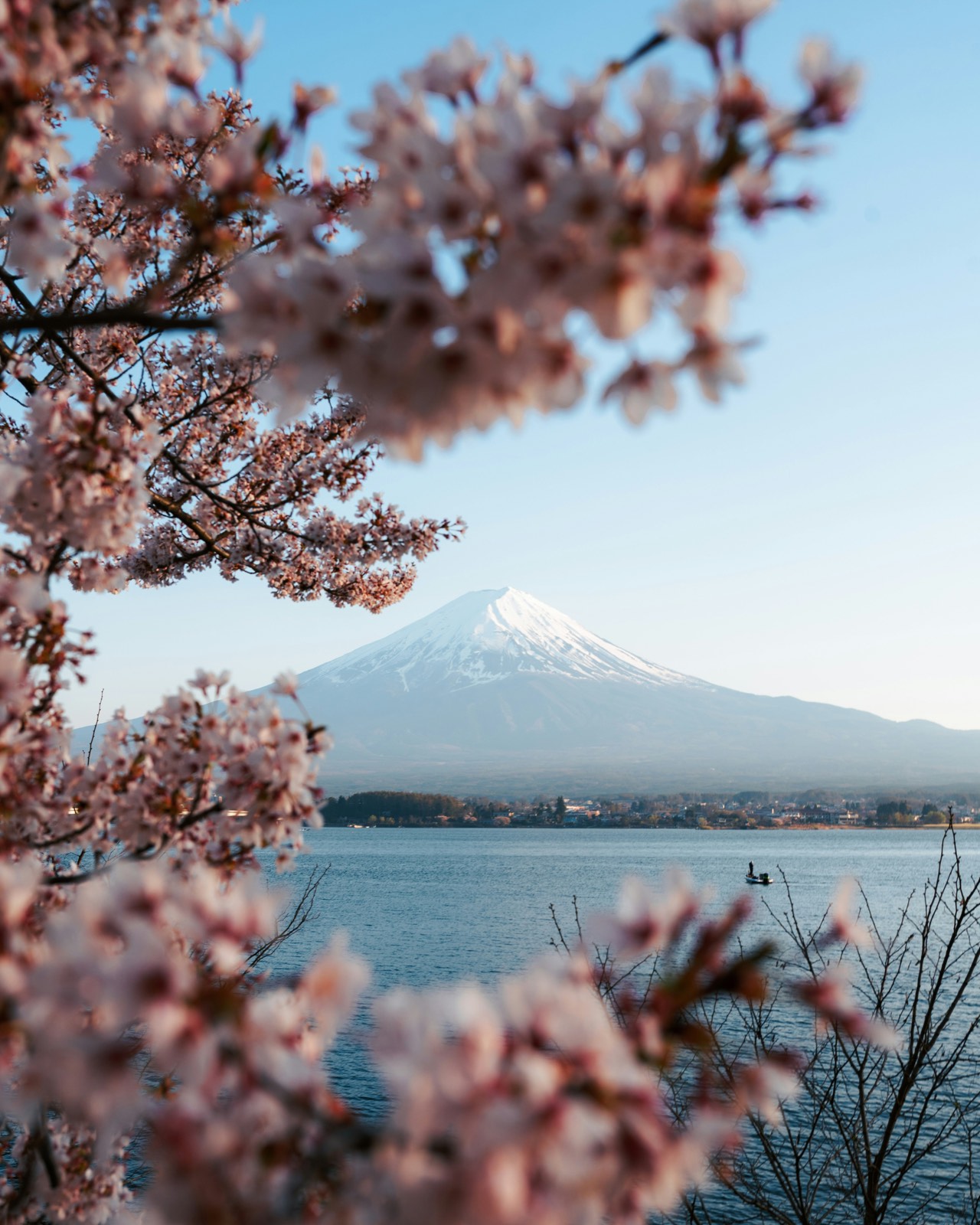
Days 1–4 — Tokyo. Land, recover, and do your first hanami (blossom viewing) in Ueno or Shinjuku Gyoen. Evening stroll along the illuminated Meguro River. Day-trip option: Kawaguchiko for cherry blossoms with Mt. Fuji behind them (go on a weekday — it’s an overtourism hotspot).
Day 5 — Shinkansen to Kyoto. The bullet train takes about 2 hours 15 minutes. Book seats on the right side (D/E) for Fuji views.
Days 5–8 — Kyoto. Philosopher’s Path at 7 a.m. before the crowds, Maruyama Park’s weeping cherry at night, Arashiyama’s bamboo grove and riverbank blossoms, and one guided evening tour in Gion.
Days 9–10 — Osaka. Osaka Castle’s moats ringed in pink, street food in Dotonbori, fly out of Kansai (KIX).
If the bloom runs late: swap the order — start in Kyoto/Osaka and finish in Tokyo. If it runs early: add a Yoshino day trip from Kyoto or push north to Kanazawa.
Booking timeline: this trip sells out
Cherry blossom season is Japan’s single busiest travel period — April 2025 set the all-time record for inbound visitors in one month. Prices surge 50–100% and the best-located hotels genuinely sell out.
- 9–12 months out: Book hotels in Tokyo and Kyoto (free-cancellation rates, so a forecast shift costs you nothing). Kyoto is the tightest market in the country.
- 6 months out: Book international flights.
- 1–3 months out: Book popular tours, teamLab tickets, and any kaiseki dinners.
- 1 month out: Buy rail passes or Shinkansen tickets; reserve seats when booking opens.
- 2 weeks out: Check the forecast and shuffle your city order if needed — this is why you booked refundable rooms.
Practical tips
- Crowds: Full-bloom weekends are intense everywhere. Go at sunrise — parks are open, light is beautiful, and you’ll share the Philosopher’s Path with a handful of joggers instead of thousands of visitors.
- Weather: Late March is 8–17°C (46–63°F) — bring layers and a rain shell. Rain mid-trip is likely; it’s also what ends the bloom, so front-load your must-see spots.
- Hanami etiquette: Don’t shake branches or pick blossoms; in picnic parks like Ueno, claiming a tarp spot early is a competitive sport locals take seriously.
- Money: Japan is more cash-friendly than you expect; 7-Eleven ATMs take foreign cards. An eSIM sorted before you land saves the airport SIM-counter line.